Saving Up for a Major Purchase Without Relying on Debt

I was sitting on my floor last Tuesday, staring at a gorgeous, mid-century sideboard I found on a curb alert, trying to do the mental math of whether I could actually afford it without skipping meals for a week. It’s that specific, sinking feeling, isn’t it? We’re constantly bombarded by these “aesthetic” lifestyle influencers telling us to just “manifest” our dreams or buy a $50 planner to track our goals, but nobody talks about the actual, gritty reality of how to save for a big purchase when your rent is already eating half your paycheck. I’m so tired of the idea that saving has to be this performative, all-or-nothing ritual that leaves you feeling deprived and miserable.
Look, I’m not here to sell you on a complicated spreadsheet or a subscription to some fancy fintech app you’ll forget to use by month three. I want to show you how to build a real, sustainable way to fund the things that actually matter to you—whether that’s a down payment, a vintage dream piece, or a much-needed trip—using what you already have. We’re going to focus on practical, low-stress shifts that fit into a real life, not some curated Pinterest board.
Realistic Financial Goal Setting Strategies for Real Life
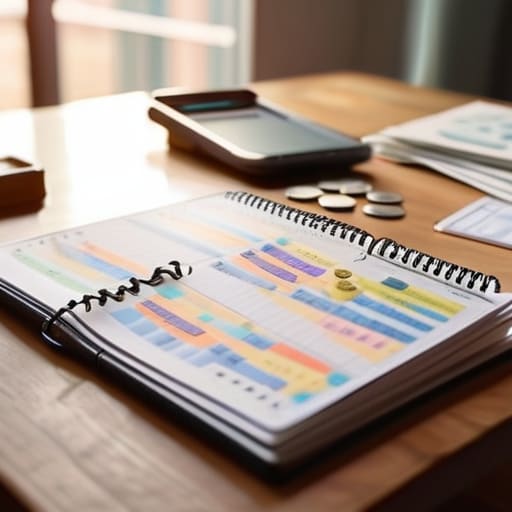
First off, we need to stop treating our goals like some vague, magical wish list. If you just say, “I want to save for a new sofa,” you’re going to get lost in the weeds of daily spending. You have to get granular. I like to break things down into short-term vs long-term savings buckets so I don’t feel overwhelmed. If the goal is a vacation three months from now, that’s a different mental game than saving for a down payment on a car. When you actually assign a timeline and a specific number to the dream, it stops being a “maybe someday” thing and starts being a real plan.
Once you have the number, stop trying to rely on willpower—it’s a finite resource and mine is usually exhausted by Tuesday. This is where some basic financial goal setting strategies actually become useful. My biggest hack? Set up an automatic transfer to a separate account the same day your paycheck hits. If you don’t see the money in your main checking account, you won’t accidentally spend it on a spontaneous takeout order or another thrift store find that you don’t actually need.
Ditch the Manual Math With Automated Savings Tips
Look, I get it. I used to spend my Sunday nights hunched over a spreadsheet, manually moving twenty bucks here and ten bucks there, trying to feel like I was “winning” at adulthood. It was exhausting, and honestly? I’d usually just give up halfway through the month because life happened. The secret I finally stumbled upon is that if you have to think about saving every single time, you’re eventually going to stop doing it. You need to take your willpower out of the equation entirely.
The easiest way to do this is to set up a recurring transfer from your checking to a separate account the literal day your paycheck hits. If you’re budgeting for large expenses, you want that money to disappear before you even have the chance to mentally earmark it for a new pair of boots or a takeout night. I also highly recommend looking into high-yield savings account benefits; it’s basically free money just for letting your funds sit there. It feels much less like a chore when you can see your balance growing by a few extra cents every month without lifting a finger.
5 ways to actually build that fund without living on ramen 24/7
- Audit your “ghost subscriptions” before you audit your life. I spent twenty minutes the other day realizing I was still paying for a meditation app I haven’t opened since 2022. Scour your bank statement for those tiny, $9.99 leaks; they aren’t small when they’re adding up to a plane ticket every year.
- Embrace the “Wait and Weight” rule for impulse buys. If I see a cute thrifted lamp or a new pair of boots, I make myself wait 72 hours. If I’m still thinking about it three days later, I’ll consider it—but usually, the dopamine hit fades and I realize I’d rather have that money in my “big purchase” bucket.
- Shop your own pantry like it’s a scavenger hunt. Before I head to the grocery store and blow my budget on “easy” weeknight meals, I spend Sunday looking at what’s actually in my cupboards. Half the time, I can make a solid meal out of some lentils and frozen spinach, which keeps my grocery bill—and my savings—on track.
- Gamify your “no-spend” days. I like to pick two days a week where I commit to spending zero dollars outside of my fixed bills. It’s not about being restrictive; it’s about proving to myself that I don’t actually need to buy a coffee or a snack every time I step out the door.
- Sell the stuff that’s just taking up mental space. Since I started restoring vintage furniture, I’ve realized how much “clutter” is actually just wasted cash. If you have clothes you haven’t worn in a year or tech gathering dust, list them. It’s the easiest way to inject a little extra momentum into your savings goal without actually working more hours.
The bottom line: how to keep this going
Stop trying to live on a “perfect” budget that leaves you feeling deprived; aim for a realistic number that allows for a little bit of life in between.
Let your bank do the heavy lifting with automation so you aren’t constantly relying on willpower that inevitably runs out by mid-month.
Focus on the “why” behind your savings goal, because remembering the actual thing you’re working toward makes the small sacrifices feel a lot less like a chore.
The Bottom Line
Look, saving for something big isn’t about some overnight transformation or living on nothing but rice and tap water. It’s really just about the small, boring stuff we talked about: setting goals that actually make sense for your real life, automating the heavy lifting so you don’t have to think about it, and being honest about where your money is actually going. You don’t need a complicated spreadsheet or a high-end finance degree to make this work. You just need a consistent system that fits into the cracks of your existing routine without making you feel like you’re punishing yourself for having a life.
At the end of the day, please remember that your worth isn’t tied to how fast you hit your savings target or how “aesthetic” your budget looks on Instagram. Some months are going to be harder than others—maybe a car repair pops up or you just need a night out to stay sane—and that is perfectly okay. The goal isn’t to be perfect; it’s to be intentional with what you have. Take it one small step at a time, be kind to yourself when things get messy, and keep moving toward that goal. You’ve totally got this.
Frequently Asked Questions
How do I actually stick to a savings goal when unexpected stuff—like a sudden car repair or a friend's birthday—keeps popping up?
Look, life is messy. It’s going to happen. If you try to follow a rigid, perfect budget, you’re going to burn out by Tuesday. Instead of treating every unexpected expense like a personal failure, build a “buffer” into your monthly plan. I call it my “life happens” fund. If a friend has a birthday, adjust your grocery budget for that week rather than touching your savings. It’s about being flexible, not perfect.
Should I be putting this money into a high-yield savings account, or is that too much effort for just one purchase?
Honestly? It’s definitely worth the ten minutes of effort. I used to think HYSA was just for people with massive windfalls, but even with a smaller goal, those extra percentage points add up. It’s not about being a Wall Street pro; it’s just free money for doing basically nothing. Set it up once, link it to your main account, and let it sit. It’s one of those rare “work smarter, not harder” moves.
How do I figure out exactly how much I can afford to set aside each month without feeling like I'm living on nothing but ramen and tap water?
Look, I’ve been there—staring at a spreadsheet and realizing my “savings plan” leaves me with exactly $4 for the week. Don’t do that to yourself. Instead of picking a random number, track your actual spending for just one week. See what you’re actually spending on coffee or that random Target run. Subtract your essential bills from your take-home pay, then take a small percentage of what’s left. If it feels tight, it’s too high. Start small.